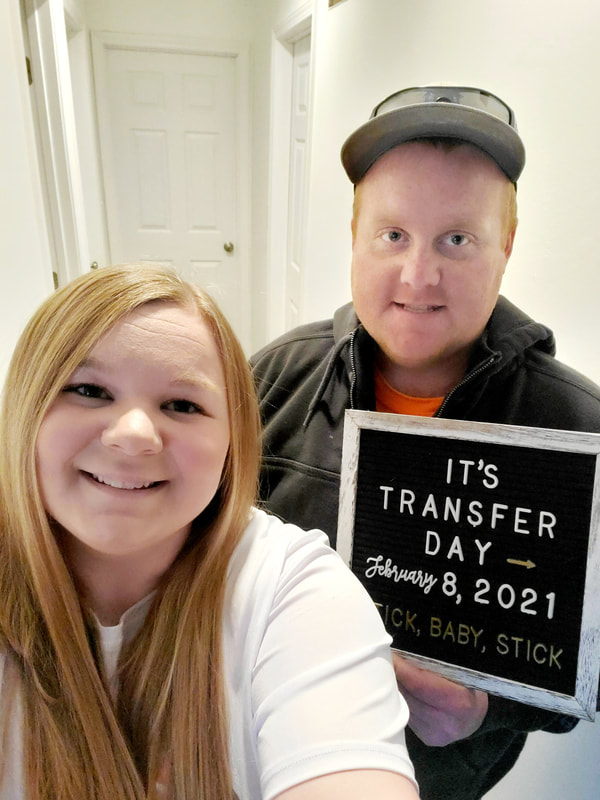
Most women do not face the awkward conversations of “trying for a baby” with their employer, but many who battle infertility are forced to open up about these personal struggles because of the schedule demands of infertility treatments. These vulnerable conversations can ignite unforeseen emotions and fears. With the high cost of treatment, financial needs are heightened and employment is necessary. Kristine shares her story about how infertility changed her career.
Tell us about your journey in being diagnosed with infertility.
I have a son who is 14 years and my pregnancy with him was unexpected. We had no complications whatsoever and honestly, having a baby just seemed so easy. When I re-married several years later and decided to grow our family with my new partner, we did all the things that they say to keep track of to get pregnant quickly. When I hit the six month mark, I knew things didn’t make sense and wanted to figure out what was preventing us from getting pregnant. I was 36 years old at this point and did not want to lose any time. When we saw our first clinic, they ran all of the basic labs with both of us and everything looked fine. I didn’t know what it was at the time, but I just had an intuitive sense that something just was not right. I also knew that my husband faced infertility in his previous marriage but they did not go through any treatments. I just knew that this issue coming up again with me, the right thing to do was to see a fertility specialist right away.

Many people who suffer from infertility need to continue to work, whether it is because of insurance coverage or the high expense of treatments that are sometimes not covered at all.
We were fortunate in that we did have insurance coverage. However, even with insurance coverage, it has been so expensive. I don’t know how this disregard is so widely accepted and I still cannot wrap my mind around it. Even with our coverage, one year we had to pay over $14,000 in out of pocket expenses. That was with what we consider to be an excellent insurance plan for infertility.
You were working this entire time as a Clinical Psychologist and also as a Dean of a Doctoral of Psychology program, with clients, students and colleagues depending on your availability. How did pursuing infertility treatments impact your schedule?
It was so challenging. When I first started IVF, I was the Dean of our program. My husband and I also own a private practice and have a case load of clients that I am responsible for. Being a Dean was the best role that I could have hoped for in the academic side of my career but I had to step down from this position into another role because of the demands of infertility. It was incredibly hard to make this decision.
At one point while going through IVF treatments, I was very publicly condemned by a high-level colleague at the University I was working for because she felt I was not available enough. I was working 60+ hours a week in addition to a difficult and time-consuming commute from the suburbs to downtown Chicago. I had previously opened up to her about our infertility struggles and I shared a lot of the IVF process with her. Looking back, I think she heard me and tried to understand it, but on a practical level did not know what this process would look like day to day.
When she came down on me in such a public way, I knew from that moment on that I needed to reevaluate and make a change to keep up with the demands of my family, my career and my responsibility to students and clients, while attending all of the ever changing doctor appointments. It was really stressful, which is not helpful when going through the infertility treatments.
The process of going through IVF can be very unpredictable. How did you manage that juggle?
You cannot plan your schedule, even day by day. Whether you are doing a stimulation protocol or preparing for a transfer, the appointments change so quickly based on how your body is responding. Not only do you have to keep up with fluctuating appointments, but you cannot predict how the medication is impacting you or even the emotional toll that you carry with you constantly. I remember one time while I was at work, I was waiting for a doctor to call me with an important update on how we would be able to move forward. I could hardly focus all day with the anticipation of the call and overthinking how I would emotionally respond while being at work, right next to a male colleague, the rest of the day. I was bound to a commuter schedule so getting up and leaving was not always an option either. It consumed my thoughts and I could not focus whatsoever.
You mentioned the medication side effects. Did you ever feel like these side effects had any consequences at work?
Definitely. The medication effects your hormones and creates such a fogginess over you. People talk about being bloated and some of the physical effects, but you are also just not your normal self. I often felt very forgetful, even just struggling with finding the right words to say which is not ideal in my profession. I did not anticipate how the medications would impact me cognitively. I had to really show myself a lot of grace throughout the process.
Did many of your colleagues or co-workers know you were going through infertility or the IVF process?
I was really selective on who I shared my journey with. I told my immediate supervisor because I really felt like she needed to know so that she wouldn’t assume that I was undependable. She shared some of her own struggles which was really comforting. After opening up with her, I shared with a few other coworkers as well. After our third transfer ended in a miscarriage, I did not tell anyone else anything because the miscarriage was such a painful experience. Those people who knew I was going through IVF wanted to be supportive and checked in with me by asking how it was going. I felt obligated to share that we miscarried or update them on our process, like I needed to tie up the loose ends of our story.
Some people who I opened up to about my miscarriage were able to sit in the pain and loss with me, but some were really not. Some people felt very uncomfortable when I told them about the miscarriage and I was tired of having these awkward conversations. I eventually found a balance of how I communicated and shared our infertility journey. I had to consider what level of detail I wanted to get into ahead of time so that I knew how others might expect me to update them further along in the process. It was really difficult to find that balance. I also know that it can be awkward on the other side, too. People genuinely want to show support but also don’t want to pry either. It is definitely a dance.

Now you’re pregnant with TWINS! How did you share this news?
We shared at 13 weeks. I did share our infertility journey and our loss when we announced. I felt like it was important to share our journey because it was like I wanted to prime our friends and family to let them know that if this pregnancy does not work out – I will need a lot of support. Being pregnant with twins, I showed pretty early on and I could not hide it much longer anyways. Every appointment, I felt like I was holding my breath. I was terrified at every ultrasound appointment and because of COVID, my husband could not come to a lot of our appointments with me. When we found out that we were having twins, I had to FaceTime him. I was so fearful that if there was a problem, I would have to face any news by myself and then have share the news with him.
We remembered Pregnancy and Infant Loss Awareness month in October. Is there anything you would like to share about your experience with loss and how that impacted the way that you opened up to others?
I remember telling my husband that I wished we talked about miscarriage more because I remember feeling like I needed some time to process the loss. For me, it was such a personal loss and I did not have time to grieve like I would be given if I had lost another family member. Naturally, people would expect me to take off some time to process and grieve. We prepared so long for that pregnancy and I cannot describe the pain I felt. It is apparent that many people do not consider a miscarriage a real loss. There are a lot of social norms, rituals and public ceremonies to honor loss in our culture, but for some reason miscarriage is not seen as a true socially accepted loss.
Thank you to Kristine for opening up about your family, grief and the demands of infertility.