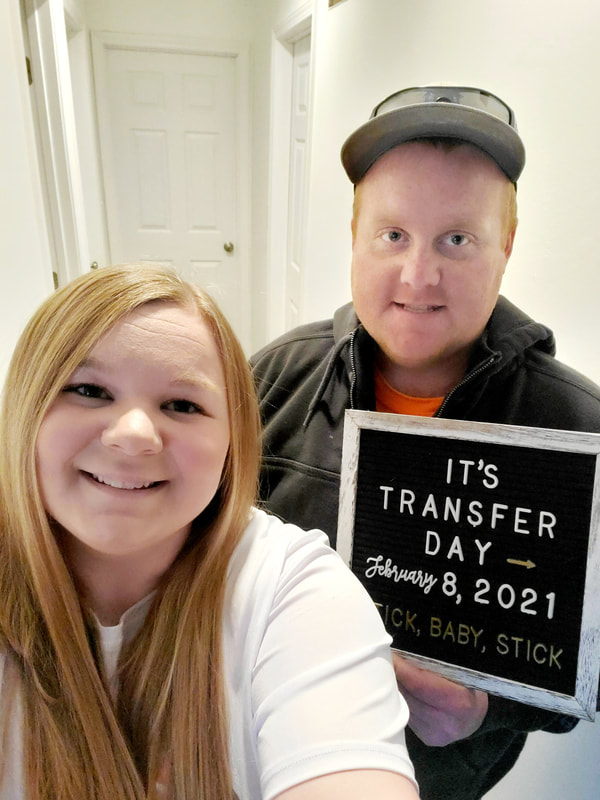
When Erynn and her husband, Andy were pursuing infertility treatments, they were overwhelmed with the costs despite having what they thought was extensive medical insurance coverage. With the natural determination of a mother, Erynn, a full-time dental assistant, decided to get creative and picked up an additional part-time job at Starbucks to get their infertility insurance. She opens up about her fight to become a mom with hope to bring awareness to the lack of resources many people with an infertility diagnosis face.
Tell us about your journey that ultimately led to your infertility diagnosis.
After my husband and I were married, we started trying for a family right away. After nine months of trying with no luck and consulting with multiple doctors, I was diagnosed with ‘unexplained infertility’. We tried everything, including eight $800 Intrauterine Insemination (IUI) procedures. Nothing was working so we were referred to another OBGYN specialist who also told me I had ‘unexplained infertility’. I couldn’t settle on that diagnosis. Something inside me knew that there was something more going on so after pushing for further testing, I was finally diagnosed with diminished ovarian reserve. I was 31 years old but had the eggs of a 49 year old. I had always joked that I was an old soul. Well, I guess I am an “old soul” but didn’t realize how old I really was!
When you were diagnosed with diminished ovarian reserve, did you pursue In Vitro Fertilization (IVF) right away?
The specialists told me that IVF was the only next step for us, which we knew we would pursue right away. Then they told us the cost, around $21,000. My husband had fantastic insurance and we were blown away with the lack of coverage. We agreed that we could pursue IVF once because that was all we could afford. Even still, we put this first round of IVF on a Southwest credit card. We wanted points so we could go on a baby moon! We thought it was a straightforward route. We laugh about those plans now!
What were some of the emotions you felt when you were trying to find answers? Did your husband share with you the emotions he felt?
I was really mad to be honest. I was mad at my body and I was mad at God.
My whole life, I wanted to be a mom. It was my version of the “American Dream”. Why couldn’t it be so simple? We talked a lot about how we wish we could turn back time — meet earlier in life, get married sooner, start trying sooner. We just never thought I would have these infertility issues until we started trying. At my age with no prior related diagnoses, it was completely unexpected.
It’s one thing to want a family but it’s another thing to have enough strength in your marriage to go through hell to create your family. We had to be on the exact same page. He was supportive of the end goal and remained positive for me.
Infertility is devastating and it can really put a strain on marriages. I have seen many couples divorce as they faced their own struggles with infertility. It is so important to communicate and check in with each other throughout the process.

Many people who have not gone through infertility do not know how delicate the process is and also so different for everyone. What was your IVF journey like?
The first round of IVF was overwhelming and heartbreaking. After everything we had gone through with medications, tests, injections, we did not even make an embryo to transfer. We said we would never do it again, but six weeks later we went back to the doctor. We were not ready to give up on becoming parents yet.
But financially, we were still struggling with the cost of IVF so at that point we sought out other options; we were able to obtain a line of credit through our bank. In the end, we pursued four rounds of IVF cycles with this line of credit. Out of these four, we were only able to create one embryo to transfer. Unfortunately, this embryo didn’t stick and we were not able to get pregnant so we were back to square one. We had exhausted our financial resources well beyond what we had even prepared for.
Did your insurance cover the tests, etc. up to the point you were diagnosed?
They only covered the tests to confirm infertility diagnosis. They didn’t cover anything else, including the medication. At one point during the process, I had to get a single testosterone injection to grow follicles (follicles are in the ovary, and they grow the eggs), which cost about $900. These injections are actually more common than one would think but I needed it for IVF. When talking to the pharmacy about the cost, the pharmacist commented on my insurance coverage that they already had on file. The testosterone injection would have been completely covered if I was preparing for a different surgery, such as a gender reassignment, but for infertility it was not covered. I couldn’t believe it — a medical doctor had diagnosed me with diminished ovarian reserve and was treating me for it using testosterone but yet, it was not covered by my insurance. It felt very unfair.
So financially, there were some monumental barriers. Was there a moment where the “fight” kicked in, not allowing financial barriers get in the way of becoming a Mom?
Even though we had gone through four rounds of IVF with no baby, I did have some hope because one of the times we did actually make an embryo to be transferred. This was the hope I tightly hung on to so that I could keep going, even amidst the scramble to figure out how to pay the financial cost. It was around that time I also found out about Starbucks and their infertility insurance ($20,000 benefit!) for part-time employees. This news felt like a new offering of hope. If I had to work at Starbucks to keep fighting, then so be it. I couldn’t give up; this was just what I knew I needed to do.
How did you hear about the fertility benefits and then decide to work at Starbucks?
I was trying to seek out some infertility support groups and there were many groups on Facebook. One in particular mentioned something about employers covering infertility through their insurance, including Bank of America, Wells Fargo, and Starbucks for part-time employees. I am a full-time Dental Assistant and could not afford to give up my career either. I knew it would be hard but it was also worth it to me. In the end, I had to work 20 hours a week or 240 hours in a 90-day window to meet the audit and to be covered by the Starbucks group insurance. It took a total of 5 months of working there to have the insurance which included the $20,000 infertility coverage. When I interviewed for the job, the store manager did not even know that they covered infertility, which really shows how much infertility is not talked about!
What was that experience like, working full-time and then part-time for Starbucks just to make a baby?
It was so hard. I was waking up at 3am to get to Starbucks early so I could then go to my full time job. I did everything from cleaning toilets to making over the top complicated drinks. My paycheck went entirely to insurance. Of course, there were some pretty rude customers. I remember thinking, I am exhausted and working here for only a 10% chance of having a baby — can you please be a little bit more patient with me?! It is not an easy job!
I was really open about why I was working two jobs and my coworkers were so supportive and gave me more support than I even realized at the time!

You now have a beautiful daughter and have become a Mom. What would you tell anyone who has been just diagnosed with infertility?
Well first and foremost, one thing that infertility has taught me that I will teach my daughter is to never give up on your DREAM. You will find your way if you work hard and fight for it.
For anyone else, I would encourage them to keep going and keep fighting. The very first round I remember having boundless hope. There is a large chance that it won’t work the first time. The first time is determining how your body responds to fertility treatments. It is a marathon and not a sprint and the periods of waiting are so awful. You really learn about this through infertility communities. I would tell anyone who was diagnosed to get plugged into a supportive community, online or in person. When you engage with others going through infertility, you realize you are not alone.
I would also tell someone at the beginning of the journey that when you finally get your happy ending, you forget so much of the journey. I remembering living by Romans 8:18 verse from the Bible that says, “The pain that you’ve been suffering cannot compare to the joy that you will experience.” It is just so true and it was a great reminder for me to keep pressing on.
All that being said, some women with infertility reach the end of their journey without a child and I support them in that decision to stop. Everyone’s diagnosis, prognosis and fight are different and I do not judge others for choosing another route.
What do you wish EVERYONE knew about infertility?
I think the main message I would say is that infertility is SO common. Even though it is so common, insurances do not cover the treatment. Even though it is so common, people are often embarrassed to discuss it. Even though it is so common, people are insensitive about what they say or questions that they ask.
Comments like “it’s going to happen if you just relax” are NOT helpful. Relax?! — How can someone truly relax when they are racking up thousands of dollars of debt and putting their body through hell?!?
Infertility is the most difficult thing that I have ever faced and I know that it is for many others. Most people who haven’t gone through it don’t really understand just how devastating it is– emotionally, physically and financially.

Thank you Erynn for your vulnerability in sharing the financial barriers that are all too familiar to the infertility community!